Dr Brianna Le Busque

Dr Brianna Le Busque

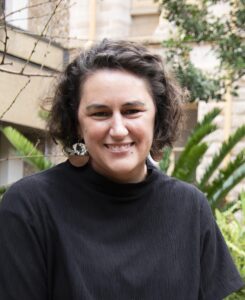
Dr. Brianna Le Busque is trying to make Australia a more Ocean Literate Society. Many Australians are not connected to the ocean which means they are not getting the benefits of blue spaces or caring for our oceans.

Brianna Le Busque explores peoples’ relationship with the ocean and marine species, including how biophobia (dislike/fear of the natural world) and biophilia (positive connections to the natural world) impact how people engage with the ocean and ocean conservation. Some projects she has worked on recently include understanding children’s fear of sharks, evaluating benefits of ocean retreat experiences, and exploring eco-anxiety caused by the Harmful Algal Bloom event in South Australia. She brings a psychological lens to marine science, and likes to say she studies the most complicated species- people!

A/Prof Phillipa McCormack

A/Prof Phillipa McCormack

Australia is one of the most biodiverse countries on earth with unique environments that exist nowhere else in the world. However, serious threats such as climate disasters, invasive species and land clearing mean that many of Australia’s environments are at risk of being lost. National and state governments have recognised that we need stronger, clearer and more future-focused laws and policies to address these threats.

Phillipa works at this crucial intersection between conservation science and practical legal reform, helping to design laws and policies that can keep environments safe, now and into the future.

Phillipa’s research focuses on translating biodiversity science into ambitious legal reform to help protect nature. Collaborating with government, scientists and the community, she examines how cutting-edge conservation research can inform new ways of writing, and putting into practice, future-focused nature laws. In particular, her research focuses on embedding climate adaptation strategies into laws and policies such as the new Biodiversity Act 2025 in South Australia.

Phillipa is also passionate about equipping the next generation of scientists to understand how laws – when they are working well – can help nature and people to flourish. In her activities with schools, she works to help students to advocate for better climate education and to help shape the next generation of climate and nature warriors.

A/Prof Stephanie Harrison

A/Prof Stephanie Harrison

Ensuring that older people receive high-quality care is a critical societal challenge that affects individuals, families, and communities across Australia. As the population ages and increasing numbers of older adults access aged care services, there is a growing need to ensure that care is informed by high-quality evidence. However, older people accessing aged care are frequently underrepresented in many research studies, limiting the evidence available to guide their treatment and care.

A/Prof Harrison uses large, linked national datasets to better understand the health of older people and the care they receive. By examining information that is already collected through health and aged care systems, she identifies ways to improve care, safety, and health outcomes for older people. Her research provides important evidence that helps policy makers and aged care providers make decisions to improve services for older people.

Her work has led to real-world improvements in aged care policy and practice. For example, her research on the use of psychotropic medicines helped shape national policy, improving the safety and quality of care for more than 400,000 people living with dementia. She has also contributed to the expansion of the Australian Government’s National Aged Care Quality Indicator Program, which helps monitor and improve the quality and safety of aged care.

A/Prof Harrison is currently leading research to improve access to long-term care for older people after stroke and to understand how recent aged care reforms are affecting people living with dementia. She is also leading a large program of research examining how factors such as where people live, their income, social support, and cultural background influence access to aged care services. This work aims to reduce inequalities and ensure that all older people can access the care and support they need, when they need it.

Dr Yohannes Adama Melaku

Dr Yohannes Adama Melaku

Dr Yohannes Melaku studies two things everyone does every day: eating and sleeping. Poor diet and poor sleep are very common and can contribute to serious health problems, but there is still a lot we do not know about how these behaviours work together and which changes can make the biggest difference to long-term health. His work aims to better understand these links so that people can make healthier choices and reduce their risk of chronic disease.

Dr Melaku uses large population studies and advanced data methods to understand how diet, sleep and other lifestyle behaviours affect health. His research has helped show, for example, that healthier plant-based diets are linked with a lower risk of obstructive sleep apnoea. He is now building on this work to identify practical ways to improve diet, sleep and overall wellbeing, while also working directly with communities to turn research findings into clear and useful health information. A particular focus is making this information accessible to culturally and linguistically diverse communities, so that the benefits of research reach people who may otherwise be missed.

A/Prof Ania Kotarba

A/Prof Anna Maria (Ania) Kotarba-Morley

A/Prof Kotarba’s research examines how climate change affects cultural heritage and the communities for whom that heritage is part of living culture, identity and connection to place and Country. Culture and heritage are non-renewable resources. Once a site, cultural landscape or associated knowledge is lost, that loss can be permanent.

Sea-level rise, coastal erosion, flooding, fire and other climate-driven hazards are already affecting culturally significant places across Australia and the wider Asia-Pacific. In many cases, we still do not have adequate ways of identifying what is most at risk, understanding what those losses mean for communities, or incorporating cultural heritage into climate adaptation.

This is particularly important for Indigenous communities, where environmental change can affect not only physical places but the cultural knowledge, practices and relationships connected to Country. A/Prof Kotarba’s work addresses this gap by looking at culture and heritage as an important part of climate risk, adaptation and resilience.

A/Prof Kotarba’s research develops practical and scientifically robust ways to predict, document and respond to climate impacts on cultural heritage. She works with Indigenous communities, archaeologists, climate scientists and other researchers to combine cultural and community knowledge with environmental monitoring, GIS and spatial analysis, drone and satellite mapping, 3D documentation, underwater survey, and coastal and climate modelling.

A major focus of her current research is using these different forms of evidence to understand how landscapes and coastlines are changing, identify which cultural places are most vulnerable, and monitor those changes over time. This includes my work with Traditional Owners in Zenadth Kes (Torres Strait), where we are combining cultural knowledge with mapping, seasonal calendars, environmental data and monitoring to understand the impacts of sea-level rise, erosion and other coastal hazards on cultural heritage and develop practical approaches for responding to them.

A/Prof Kotarba also works at the policy level to improve recognition of culture and heritage in climate adaptation, disaster risk reduction and climate loss and damage, so that cultural impacts are considered alongside environmental, social and economic ones.

Dr Shervin Kabiri

Dr Shervin Kabiri

Dr Shervin Kabiri’s research addresses one of the most pressing environmental challenges of our time: PFAS (per- and polyfluoroalkyl substances), often referred to as “forever chemicals.” These highly persistent chemicals have been widely used in industrial and consumer products and are now found in soil, water, biosolids and ecosystems around the world. Their persistence and mobility make PFAS extremely difficult to remove once they enter the environment, creating long-term risks for environmental and human health.

A major challenge is that conventional treatment methods are often expensive, energy-intensive, or ineffective for some of the PFAS. Dr Kabiri’s work aims to develop practical and scalable approaches to remove, destroy or immobilise PFAS, particularly from contaminated soils, water and biosolids. Her research combines environmental chemistry, materials science and engineering to develop innovative treatment technologies and understand how PFAS behave in real-world environments.

Through strong collaboration with industry, government and research organisations, her work seeks to move beyond laboratory discoveries and translate scientific knowledge into practical solutions for managing PFAS contamination.

Dr Shervin Kabiri’s research is developing practical and scalable solutions to manage PFAS contamination by focusing on three complementary approaches: removing, destroying and immobilising PFAS. Her work has demonstrated that carbon-based materials, including activated carbon and biochar, can significantly reduce the mobility and leaching of PFAS from contaminated soils, helping to prevent their movement into water and food systems. She is also investigating innovative technologies, including high-shear mixing and foam-based processes, to rapidly remove PFAS from contaminated water.

More recently, Dr Kabiri has expanded her research to PFAS in biosolids, investigating how PFAS behave during wastewater treatment and the risks associated with applying biosolids to agricultural land. Her research combines laboratory experiments, field studies and modelling to understand PFAS transfer through soil, plants, livestock and water.

Her current research is focused on developing treatment technologies that can be translated from laboratory-scale experiments to practical, large-scale applications. By working closely with industry, government and research organisations, she aims to develop solutions that are not only scientifically effective but also economically and environmentally sustainable.

Dr Matthew Snelson

Spread out flat, the gut lining covers around 32 square metres, about the floor space of a small studio apartment. It has an important job: to let nutrients through while keeping trillions of bacteria in the gut where they belong. In people with conditions like high blood pressure, diabetes and kidney disease, this barrier becomes “leaky”. Bacteria and the substances they produce slip into the blood, where the immune system treats them as invaders. The result is a constant, low-level burn of inflammation that damages blood vessels, the heart and kidneys. Over years, that damage can end in a heart attack, heart failure, or kidneys that stop working altogether.

He now leads the Gut Homeostasis in Cardiometabolic Health Laboratory at Edith Cowan University, where his team is developing better ways to measure gut leakiness in people, and testing which fibres best strengthen the gut barrier. The goal is to make the gut barrier a treatment target, addressed through diet alongside existing medicines.

Dr Fiona Panther

Gravitational waves are ripples in the fabric of spacetime, produced when the super-dense remnants of dead stars collide. They are our only direct window into the interiors of neutron stars: objects whose centers are a soup of quarks and gluons, almost identical to the Universe a fraction of a second after the Big Bang. They also give us an independent way to measure how fast the Universe is expanding, and can tell us how stars live and die across cosmic time.

Gravitational waves are incredibly faint and hard to detect. Dr Fiona Panther uses Bayesian inference, supercomputers and signal processing techniques to find new, better ways of searching for gravitational waves and light associated with black hole and neutron star collisions. She studies how we can use them to measure the fundamental properties of the Universe.

Dr Panther uses gravitational waves and light to study how neutron stars and black holes form and evolve, and what they can tell us about how our Universe is changing over cosmic time. As a member of the LIGO-Virgo-KAGRA collaboration, she has developed software for the real-time detection of gravitational waves, and coordinated analyses of gravitational wave events that have potential electromagnetic counterparts as the co-chair of the Electromagnetic Counterpart Claim Taskforce. She was a key member of the team that identified the first potential coincidence between a fast radio burst and a neutron star merger, identifying and characterizing the galaxy that the fast radio burst originated from. She has developed new statistical methods that use gravitational waves to measure the maximum mass a neutron star can achieve before it collapses to become a black hole. Her current work focuses on how we can measure the accelerated expansion of the Universe using gravitational waves, aiming to solve an almost 30 year debate about just how fast this accelerated expansion is. Dr Panther is also interested in how we can apply the computer algorithms we use to study gravitational waves to other problems. She is now working on applying her knowledge beyond astrophysics, including using electroencephalograms to create objective diagnostic criteria for neurological problems, and understanding how seismic waves cause the ground to vibrate and tilt.

Dr Kai Chen

Many diseases, including bone and joint conditions and cancers, are driven by changes in how individual cells use nutrients. Much of this biology remains hidden because it occurs deep within complex tissues and at extremely small scales. A major challenge is that conventional methods often require cells to be removed from their natural environment. These approaches can reveal what molecules are present, but not necessarily which cells are using them, where this is happening, or how neighbouring cells behave differently. As a result, important processes that drive disease progression or determine whether a treatment reaches its intended target can be overlooked.

Dr Kai Chen has developed advanced imaging approaches that reveal how nutrients and medicines are used by individual cells within intact tissues. His work has shown how nutrients are metabolised in bone and how RNA-based medicines move through cells and tissues. He is now applying these technologies to understand how metabolism changes in osteoporosis and cancer, and how new therapies are delivered and function in tissues, with the goal of identifying new disease mechanisms and improving treatment.

Dr Amelia Harray

Every day we eat, drink and breathe in tiny plastic particles and the invisible chemicals they release. Scientists have found microplastics in placentas, lungs and even human brains. More than 16,000 chemicals are added to plastics, such as BPA and phthalates, that enter our bodies and mimic our hormones. They have been linked to infertility, diabetes, heart disease and neurodevelopmental problems.

The problem is, plastic is impossible to avoid. Our food touches it at nearly every step of the food chain, from the farm and packaging to our lunch boxes and frypans. While some people can choose unpackaged fresh foods or buy stainless steel saucepans, many Australians, especially in rural and remote areas, have little choice but to rely on plastic-wrapped foods. We need policy change to cut our exposure to plastic chemicals in food.

My research is helping everyday Australians reduce plastic chemicals in their lives by providing low-plastic foods, drinks, cleaning and personal care products, tracking changes in their health over time. We’re working with over 100 farmers and producers to cut plastic contact from paddock to plate. Next, we’re investigating whether reducing plastic exposure can improve fertility in Australian couples. As a dietitian and nutritionist, I translate evidence into simple steps Aussies can take to eat fewer plastics to protect their health and our planet.